


Mexican Independence Day in Cancun: What It's Really Like (and What It Isn't)

Updated: Sep 15
If you are in Cancun in the middle of September, you might walk straight into the biggest, loudest, and most heartfelt party of the entire Mexican year. Whole plazas turn green, white, and red, strangers hand you little flags, and at a certain moment an entire country shouts the same word at the same time. Here is what Mexican Independence Day actually is, what it looks like in Cancun, and the one thing almost every visitor gets wrong about it.
First, the thing everyone gets wrong: this is not Cinco de Mayo
Let us clear this up before anything else, because it trips up many visitors. Cinco de Mayo, the fifth of May, is not Mexican Independence Day. It marks a single battle, the Battle of Puebla in 1862, and honestly it is a fairly minor holiday in most of Mexico. It became a big deal mostly north of the border, tied up with restaurants and drink promotions. The real national day, the one Mexicans genuinely pour into the streets for, is Independence Day in September. If you want to sound like you actually know the country, that is the difference to remember.
When it actually happens: the night of the fifteenth
Here is the next surprise. Independence Day itself is the sixteenth of September, but the celebration peaks the night before, on the fifteenth. That is when the whole country gathers in its town squares for the moment that matters most, a re-enactment of the shout that started it all. Mexicans even call the whole of September el mes patrio, the patriotic month, and flags and decorations go up weeks in advance, so even in early or mid September you will feel it building. But the evening of the fifteenth is the night to be out, not the sixteenth.
El Grito: the shout that started a country
To understand why a whole nation yells together, you have to go back to 1810. Mexico was still a colony of Spain. In the small town of Dolores, a parish priest named Miguel Hidalgo rang his church bell in the early hours and called his people to rise against colonial rule. That call became known as the Grito de Dolores, the Cry of Dolores, and it lit the fuse of a long and bloody war. Hidalgo himself did not live to see it won, but the fight he started ended eleven years later, in 1821, with Mexico finally free of Spanish rule.
Every year since, that shout is re-enacted across the country on the night of the fifteenth. The President gives it from the National Palace in Mexico City, and in every town and city the mayor does the same from the main plaza. They ring a bell, then call out a roll of the heroes of independence, and after each name the enormous crowd roars back the same word: Viva. Viva Hidalgo. Viva Mexico. It ends with the whole square shouting Viva Mexico three times into the night, and then everything erupts.
Mexico City Know How To Throw A Party

What does it look like in Cancun?
Cancun does it properly. The heart of it is downtown, in El Centro, at the main civic plaza rather than out in the hotel zone. Through the evening of the fifteenth, the square fills with families, food stalls and music, everyone dressed in green, white and red, with flags, face paint and little light-up souvenirs everywhere. Not long before midnight, the mayor steps out and delivers El Grito; the crowd answers Viva at the top of its lungs, and the sky lights up. In recent years, the fireworks have been joined or replaced by a drone show that spells out patriotic images across the night sky.
The next morning, the sixteenth, is calmer and more formal: a civic and military parade makes its way down one of the main avenues, with school groups, marching bands and folkloric dancers. If the night of the fifteenth is the emotional explosion, the morning of the sixteenth is the proud, family-friendly victory lap.
The food, the colors and the feeling

Independence is a feast as much as a party. This is the season for chiles en nogada, the famous dish dressed in the exact green, white and red of the flag, and for great steaming pots of pozole. Add antojitos from every stall, a little tequila or mezcal for the adults, mariachi drifting between folkloric dance troupes, and the whole thing has a warmth that is hard to describe until you are standing in it.
What surprises most visitors is how genuinely moving it is. It is loud and joyful, yes, but beneath the noise lies real pride. Standing in a Cancun plaza while thousands of people shout "Viva Mexico" together is one of those travel moments that stay with you long after the tan has faded.
The flag, the eagle and the colors
You will be surrounded by green, white and red all day, so it is worth knowing what they mean. Green stands for hope and independence, white for unity, and red for the blood of the heroes who won the fight. In the center of the flag sits one of the oldest symbols in the Americas: an eagle perched on a cactus, devouring a serpent. It comes from an ancient Aztec legend, in which the gods told a wandering people to build their city on the exact spot where they saw that sign. Where they finally saw it, they founded Tenochtitlan, the island city that grew into modern Mexico City. Understanding these symbols enriches your appreciation of the holiday's significance and the deep history behind the celebrations.
Where to catch it as a visitor

You really have two easy options. For the real thing, head downtown on the evening of the fifteenth for the civic Grito in the main plaza. It is free, authentic, packed with local families, and the version worth seeing at least once. To ensure a safe experience, arrive early, stay with your group, keep an eye on your belongings, and follow local customs. Go early, expect big crowds, keep an eye on your group and your belongings the way you would at any large event, and soak it up.
If you would rather keep it close and easy, plenty of hotel zone resorts and restaurants throw their own Mexican fiesta nights around the fifteenth, with mariachi, folkloric shows, a spread of traditional food and their own smaller fireworks. It is a gentler, more polished way to join in without leaving your evening to chance. Both are good. Do the downtown Grito if you want the goosebumps, the resort fiesta if you want the comfort, and if you have an evening to spare, there is no rule against doing both.
A tip from the water: mid-September is a quietly great time to be here

Here is something the travel brochures rarely tell you. Mid-September falls in what we quietly think of as one of the best windows of the whole year to be in Cancun. The peak-season crowds have gone home, the water is at its warmest, and between weather systems the visibility can be superb, all while prices are gentler than in winter. It also happens to line up perfectly with the festivities, which means you can spend your days out on the reef and your evenings shouting Viva in the plaza.
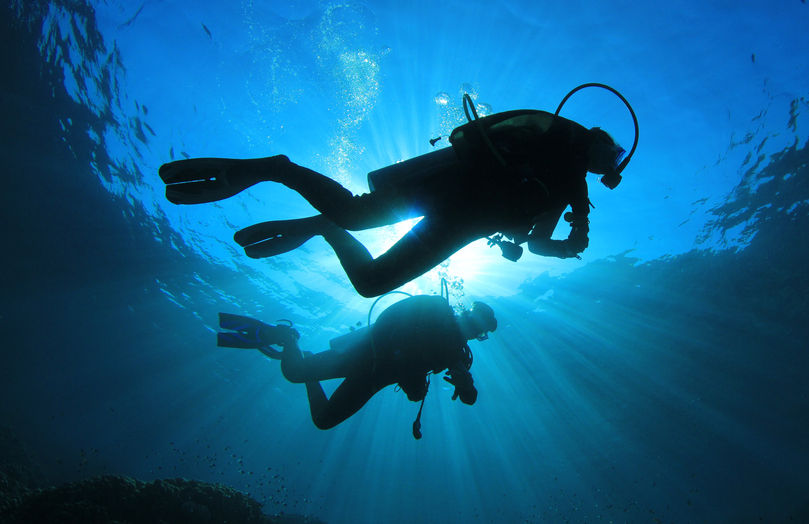
So if you are planning a trip around the celebrations, build in some diving or snorkeling. You can drift a reef in the afternoon or float over the MUSA underwater museum, dry off, pull on something green, white and red, and head out for the Grito the same night. We break down exactly why this time of year works so well in our guide to the best time to dive Cancun, and we are always happy to plan your water days around the party. Browse all Manta tours in Cancun at the top of the page
Come for the dive, stay for the Grito.
Mexican Independence Day is the country at its most alive, and Cancun throws itself into it completely. Get the date right: the fifteenth at night for the Grito and the sixteenth for the parade. Remember, it has nothing to do with Cinco de Mayo, and you will experience the real thing rather than a tourist version. And if you are here for the water as much as the culture, that is genuinely the best of both worlds. Come dive with us by day, and go shout Viva Mexico by night.

Dive and snorkel with Manta Divers, Cancun.
Call (800) 659-0712 · Info@mantadivers.com · mantadivers.com


Comments