


Day of the Dead in Cancun: What It's Really Like, and Where to Join In

Updated: Aug 30

Every year, around the middle of October, our inbox starts filling with a version of the same question.
"We're arriving on the 30th. Is Day of the Dead something we can see, or is it a private thing we shouldn't intrude on?"
It's a good question, and it's usually asked nervously. Most visitors from the US, Canada, and Europe arrive with a picture in their heads: skulls, darkness, something solemn and a little bit haunted. Something you probably shouldn't photograph and definitely shouldn't join.
That picture is almost exactly wrong.
Day of the Dead is not Halloween in Spanish. It is not gothic, it is not mournful, and it is not closed to you. It is one of the warmest, most inviting events in this country, and in Cancun there is a public, welcoming, gloriously loud version of it that you are encouraged to join.
But there's a second layer underneath, and it's older, quieter, and specific to this corner of Mexico. Most guides skip it entirely. We're going to start there, because once you understand it, the parades make a lot more sense.
Part One: The Quiet Layer - Hanal Pixán
It isn't called Día de Muertos here.
Across most of Mexico, the celebration is Día de Muertos. Here on the Yucatán Peninsula, which means Yucatán, Campeche, and our state, Quintana Roo, it has a very different name and a different root.
It's called Hanal Pixán (hah-NAHL pee-SHAHN).
In the Maya language, hanal means food and pixán means soul.
Food for the souls.
Locally, these are not treated as the same holiday, even when worn differently. Hanal Pixán comes from Maya belief, was later blended with Catholic customs after the Spanish arrived, and has kept its own shape throughout. The altars are built differently. The food is different. Some of the ritual is different.
If you want one phrase that shows you've done your homework before arriving, it's Hanal Pixán. Saying it to a Yucatecan can create a sense of respect and connection.
Three days, three groups
The observance spans three days, each with its own purpose.
31 October is for children who have died. The altars are lighter - sweets, toys, smaller portions, the things a child would want.
1 November is for adults.
2 November is the general day, when all souls are remembered together, and when many families go to the cemeteries.
The idea underneath it is simple and rather beautiful. The souls are permitted to come home. They travel a long way to get here. So you put out food, because they'll be hungry, and you light candles so they can find the door.
The food is buried, and that's the point.

The dish of Hanal Pixán is mucbipollo, also called Pib. It's an enormous tamale - chicken and pork, seasoned, wrapped in banana leaves, closer to a cake than anything you'd recognize as a tamale elsewhere.
What makes it remarkable is how it's cooked. It goes into a pit dug in the ground, over hot stones, and is covered over with earth. The oven is the pib, and the dish takes its name from it.
Think about what that means for a moment. On the days you welcome the dead home, you prepare their meal by burying it and bringing it back up.
Nobody has to explain the symbolism. It's in the cooking.
You'll find pib in bakeries, markets, and homes across Cancun through the end of October. If someone offers you a piece, say yes.
Xibalbá is not hell
Here's where it gets genuinely fascinating and connects to what we do.
In Maya belief, the dead traveled to Xibalbá, the underworld. The name translates roughly as "place of fear," which sounds ominous until you understand what it actually was.
Xibalbá was not a punishment. It wasn't a Christian hell, and there was no sorting of the good from the wicked at the door. Nearly everyone went there. It's much closer to the Greek idea of Hades: a realm of the dead that souls passed through, faced trials in, and were transformed by. A stage in a cycle rather than a final sentence.
That distinction matters enormously for understanding the mood of these days. If the afterlife is a passage rather than a judgment, then death is a transition, and welcoming your grandmother back for dinner in November is not macabre. It's hospitality.
And the door was a cenote.

The Maya believed there were three ways a living person could enter Xibalbá: through deep caves, through the ritual ball game, and through cenotes.
Cenotes were the most important of the three.
There's a geological reason this region ended up with a cosmology built around holes in the ground. The Yucatán Peninsula has almost no surface rivers. What it has instead is limestone, riddled with an immense network of flooded caves and underground rivers. Where the rock collapses, a cenote opens, and fresh water appears in a landscape that otherwise has none.
So through these openings came drinking water, which is to say life. And through them, the Maya believed, went the dead.
Offerings were lowered into sacred cenotes. Jade, ceramics, and at some sites, people. These were not swimming holes. They were doors.
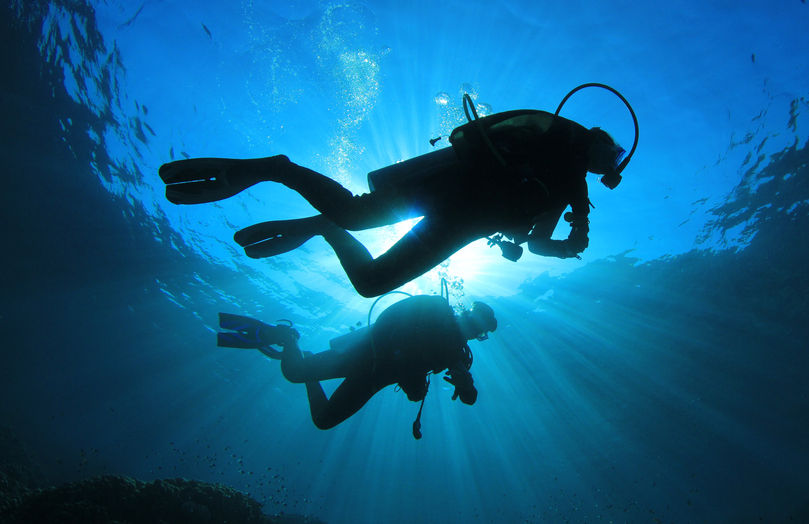
We dive cenotes most days of the week. You get used to the light shafts and the stalactites and the freshwater clarity that makes the ocean look cloudy by comparison. But every so often, usually around this time of year, you remember what you're actually swimming through, and it stops you. If you want to join this or browse all Manta tours in Cancun, head to the top of the page for all our services we offer at Manta
Part Two: The Loud Layer - Cancun's Street Celebration Why Day of the Dead in Cancun is different from the rest of the Yucatán for visitors, and how to enjoy it respectfully and safely.
Why Day of the Dead Cancun is different from the rest of the Yucatán for Da
If you go to a Maya village outside Mérida for Hanal Pixán, you'll find something intimate. Family altars. Prayer. Quiet visits to graves. It is joyful in the sense of a family reunion, not in the sense of a street party.
Cancun is not like that, and there's a specific reason.
Cancun is a young city. Fifty-odd years ago it barely existed. Almost everyone who lives here came from somewhere else - Mexico City, Oaxaca, Veracruz, Puebla, Chiapas, Michoacán. Our own team is a fair sample of that.
And every one of those places has its own Day of the Dead traditions, which people brought with them in their suitcases.
So what happens in Cancun is that the deep Maya observance of Hanal Pixán runs beneath, while on top of it sits a big, exuberant national Día de Muertos assembled from every region of Mexico at once. Parades that would look at home in Mexico City. Altars built in Oaxacan style next to Yucatecan ones. Catrinas everywhere.
Both are real. Both are happening in the same city on the same night. And the loud one is very much open to visitors.
The Catrina, and why everyone is dressed as a skeleton

You'll see hundreds of them: elegant skeleton figures in enormous flowered hats, painted faces, formal dresses.
She's called La Catrina, and she started life as satire. The artist José Guadalupe Posada drew her as a skeleton in fine European clothing, mocking Mexicans who denied their own heritage in favor of imitating Europe. The joke was that underneath the imported finery, everyone is the same set of bones.
Over the course of a century, she stopped being a cartoon and became the face of the holiday. Now painting yourself as a Catrina is participation, not costume.
And yes, you can. Face painters work the plazas throughout the celebrations, and there's nothing disrespectful about joining in - this part is genuinely public and genuinely for everyone.
It's officially recognized as one of humanity's treasures
Worth knowing because it shows how seriously Mexico takes this: UNESCO added Mexico's Day of the Dead to its list of Intangible Cultural Heritage of Humanity back in 2008.
Not a tourist attraction that grew. A tradition considered important enough to protect.
Where to Actually Go in Cancun
This is the part clients ask us about every single year, so here's the honest local answer.
Dates and programs shift each year slightly, so check the municipal cultural calendar in mid-October for exact times. But the places are consistent.
Parque de las Palapas, downtown
If you only do one thing, do this.
This is the heart of it. The park fills with community altars, food stalls, live music, face painting, and families. A procession comes through the downtown avenues and ends here. There's usually a Cena de Ánimas - a Dinner of the Souls - over the main nights.
It's free, it's family-friendly, and it is where locals actually go. Not a show put on for visitors.
Take cash for food and crafts. Eat the pan de muerto. Try atole if it's offered, a warm corn-based drink that tastes like something your grandmother would make if your grandmother were from Puebla.
Puerto Juárez and the Calle 45 pier
This one is our favorite, and it's the one most visitors never hear about.
Puerto Juárez hosts a Hanal Pixán festival with something you won't see inland: a maritime procession. Boats on the water, lit up, as part of the observance. There's also a Catrina and Catrín parade, an altar competition between schools and community groups, and craft stalls.
Mostly free. Usually kicks off in the early evening.
Given that the Maya believed souls traveled by water, a procession of lights moving across the bay is a fairly extraordinary thing to stand and watch.
The municipal cemeteries
Families clean and decorate graves, bring flowers and candles, bring food, and sit with their dead - sometimes through the night.
Please read the next section before you go anywhere near one.
The Hotel Zone
More polished, more produced, aimed at visitors. There's typically a parade with floats, giant Catrinas and Comparsas, heavily influenced by the film Coco. Many resorts build elaborate altars in their lobbies and run themed dinners and face-painting workshops.
If you're traveling with kids or you'd rather not navigate downtown, this is a perfectly good way to see it. Just know you're seeing the polished version.
Xcaret's Festival of Life and Death
The large-scale commercial option, about an hour south, running roughly 30 October to 2 November. Music, dance, theatre, workshops, community-built altars, food.
It's a genuine production with real cultural depth, and it's ticketed and busy. Whether that's your thing depends entirely on you. Some of our guests love it; others prefer the free version in the park with actual neighborhood families.
Etiquette: How Not to Be That Tourist
We'd rather tell you this plainly than have you find out by getting a look from someone.
The street events are for everyone. Parades, plazas, altars in public spaces, face painting, food stalls. Join in. Take photos. Dress up. Nobody minds, and plenty of people will be delighted you're there.
Cemeteries are different. A family sitting at a graveside is doing something private in a public place. It is not a photo opportunity. It never was.
If you visit a cemetery, go during the day, keep your voice down, keep your camera down, and don't photograph people or their graves. If in doubt, don't.
A few other things worth knowing:
Ask before photographing anyone in Catrina makeup. Most will say yes and pose happily. Asking is the whole point.
Don't step over or reach across an altar. They're built with intent, and each level means something.
If someone offers you food from an altar or their home, accept it. Feeding people is the entire idea.
"Feliz Día de Muertos" is fine. So is simply saying nothing and looking.
This isn't Mexican Halloween. Costumes of ghosts, zombies, and vampires miss the point. Catrina makeup isn't.
Can You Still Dive?
Yes. We run every day of the year, including 31 October, 1 and 2 November.
Most people plan their diving for the daytime and the celebrations for the evening, which works perfectly — the street events don't really get going until after dark.
Early November is honestly one of the better times to be in the water here. Hurricane season is winding down, the summer heat has broken, water temperatures are still warm, and visibility is usually excellent. The high-season crowds haven't arrived yet.
The dive that fits the days

If you want to do one thing in the water that connects to what's happening on land, dive a cenote.
You'd be diving through what the Maya considered a doorway to Xibalbáduring the days when the souls who traveled through it were being welcomed home. We're not going to pretend that's a mystical experience we can sell you - it's a dive, and it's a beautiful one. But knowing what you're swimming through changes it.
Our Cenote 2 Tank trip runs from the dive shop at 8:30 AM and returns around 3:00 PM. Two dives. You and your guide choose the cenotes on the day depending on conditions.
Both dives are cavern dives, not cave dives - meaning you stay inside the natural light zone with a clear, direct route to the surface throughout. You don't need any cave or cavern certification, just an open water certification and reasonable comfort in the water.
Everything is included: transport from the shop, cenote entrance fees, all gear, wetsuit, water and snacks, and all taxes. Nothing to pay when you arrive.
That last part matters more than it should around here, and it's a subject we'll come back to.
Planning Around It
Book accommodation early if you're coming specifically for the Day of the Dead celebrations in Cancun. Downtown fills up.
Expect road closures around the parade routes on the main nights. Give yourself extra time, or use taxis and apps rather than driving.
Bring cash. Most public events are free, but food, crafts and face painting are not, and small stalls don't take cards.
Come for three days, not one. The 31st, 1st and 2nd each feel different. If you can only manage one, make it 1 or 2 November.
Learn one word. Hanal Pixán. It'll open more doors than you expect.
What We Do
We build an altar in the shop each year. Our team and their families take part in the celebrations across all three days, in their own ways and traditions, from wherever in Mexico they or their parents came from.
If you're diving with us around those dates and you want to know where to go that evening, ask whoever's on the boat. You'll get an honest answer and probably an argument between two crew members about which neighborhood does it better.
That's Cancun for you.
Manta Divers Cancun
WhatsApp / WeChat
English (Mexico): +52 998 238 2116
Outside Mexico Only - Desde el extranjero
Toll-free 1 (800) 659 0712


Comments